The landscape of asean methadone regulations continues to evolve as Southeast Asian countries strengthen pharmaceutical oversight while working toward greater regional regulatory harmonization. For manufacturers, importers, distributors, and procurement organizations, understanding these regulatory developments is essential for successful market access and long-term business planning.
Although each ASEAN member state maintains its own narcotic control laws, regional initiatives are gradually aligning pharmaceutical standards, quality requirements, and regulatory cooperation. This creates opportunities for compliant manufacturers capable of supplying high-quality Methadone HCl products to authorized pharmaceutical organizations.
In 2026, asean methadone regulations are expected to remain an important consideration for organizations involved in opioid medicines, particularly those supporting hospitals, government procurement programs, and specialized treatment facilities.
ASEAN Methadone Regulations and Regional Pharmaceutical Harmonization
The Association of Southeast Asian Nations (ASEAN) has spent more than two decades advancing pharmaceutical harmonization through the ASEAN Pharmaceutical Product Working Group (PPWG).
The PPWG has developed common technical requirements, harmonized dossiers, Good Manufacturing Practice (GMP) guidelines, and quality standards intended to reduce regulatory complexity across member countries. (asean.org)
While narcotic medicines remain subject to national legislation, harmonized pharmaceutical quality standards help manufacturers prepare regulatory documentation that aligns more closely with regional expectations.
For companies involved in asean methadone regulations, understanding both regional harmonization initiatives and country-specific narcotic legislation is essential.
ASEAN Methadone Regulations Continue to Support Quality Standards
Every ASEAN country regulates methadone through controlled substance legislation while also applying pharmaceutical quality requirements based on internationally recognized GMP principles.
The Pharmaceutical Inspection Co-operation Scheme (PIC/S) has become increasingly influential throughout Southeast Asia, with several ASEAN regulatory authorities participating in PIC/S to strengthen inspection consistency and manufacturing quality.
These developments support improved pharmaceutical quality while maintaining strict oversight of narcotic medicines.
As asean methadone regulations continue evolving, manufacturers with strong GMP systems are better positioned to support authorized procurement organizations.
Opioid Regulation Southeast Asia: Balancing Access and Control
The discussion surrounding opioid regulation southeast asia focuses on balancing legitimate medical access with effective narcotic control.
According to the International Narcotics Control Board (INCB), approximately 80% of the world’s population still has limited or inadequate access to opioid medicines for pain treatment, despite sufficient global production capacity. (incb.org)
The INCB also emphasizes that governments should ensure adequate availability of narcotic medicines for medical and scientific purposes while preventing diversion and misuse.
These recommendations significantly influence opioid regulation southeast asia, where healthcare systems continue expanding access to pain management and opioid dependence treatment.
ASEAN Narcotic Compliance Requirements
Maintaining asean narcotic compliance requires pharmaceutical organizations to satisfy multiple regulatory expectations.
These commonly include:
- GMP-compliant manufacturing
- Controlled substance licensing
- Import and export authorizations
- Batch traceability
- Product quality documentation
- Stability data
- Pharmacovigilance obligations
- Secure transportation procedures
While documentation requirements vary between ASEAN member states, regulatory agencies generally require comprehensive technical information before authorizing controlled pharmaceutical products.
Organizations that prioritize asean narcotic compliance are better positioned for sustainable market access throughout the region.
Methadone ASEAN Import Procedures
The process for methadone asean import typically involves multiple regulatory approvals because methadone is classified as a controlled narcotic medicine.
Depending on the destination country, importers may require:
- Import permits
- Narcotic licenses
- Product registration
- GMP certificates
- Certificate of Pharmaceutical Product (CPP)
- Certificate of Analysis (CoA)
- Batch documentation
- Export authorization from the country of origin
Many ASEAN countries also require government authorization before each shipment of controlled narcotic medicines can enter the country.
These procedures ensure that methadone asean import activities remain compliant with national and international narcotic control conventions.
ASEAN Pharmaceutical Market Growth Supports Future Demand
The pharmaceutical sector across Southeast Asia continues to expand rapidly.
According to Mordor Intelligence, the ASEAN pharmaceutical market is projected to grow at a compound annual growth rate (CAGR) exceeding 7% during the current forecast period, driven by healthcare investment, aging populations, and expanding access to medical services.
At the same time, the ASEAN region is home to approximately 690 million people, making it one of the world’s fastest-growing healthcare markets.
As healthcare systems continue modernizing, demand for regulated pharmaceutical products—including authorized narcotic medicines—is expected to increase.
These trends reinforce the importance of understanding asean methadone regulations for long-term commercial planning.
ASEAN Methadone Regulations and Healthcare Modernization
Healthcare investment throughout Southeast Asia continues to improve:
- Hospital capacity
- Cancer treatment services
- Palliative care programs
- Pain management services
- Addiction treatment infrastructure
- Pharmaceutical procurement systems
These developments contribute to increasing demand for compliant pharmaceutical manufacturers capable of supporting regulated healthcare supply chains.
As governments continue strengthening healthcare infrastructure, asean methadone regulations are expected to remain aligned with broader goals of patient safety, pharmaceutical quality, and controlled access.
Vonage Pharma’s Narcotics Category for Global Providers
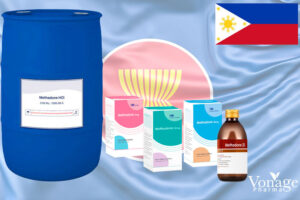
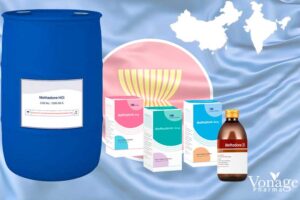
Vonage Pharma supports pharmaceutical companies, procurement agencies, hospitals, and authorized distributors through its specialized Narcotics product category.
The portfolio includes:
- Methadone HCl
- Methadone API
- Morphine products
- Oxycodone products
- Buprenorphine products
- Other controlled pharmaceutical ingredients and finished dosage forms
Among these products, Methadone HCl remains one of the most important medicines used in regulated pain management and opioid dependence treatment programs worldwide.
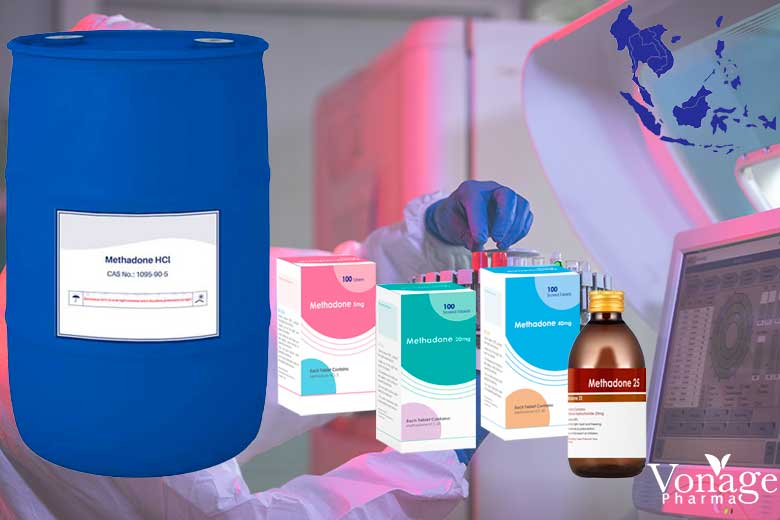
Vonage Pharma manufactures bulk Methadone HCl for pharmaceutical providers requiring dependable production capacity, international regulatory documentation, GMP-oriented manufacturing, and long-term supply support.
For organizations operating under asean methadone regulations, selecting a manufacturing partner capable of meeting demanding quality and compliance expectations is essential for successful market participation.
Future Outlook for ASEAN Methadone Regulations
The future of asean methadone regulations will likely continue emphasizing two complementary objectives:
- Strengthening access to essential medicines for legitimate medical purposes.
- Maintaining rigorous regulatory oversight of narcotic pharmaceuticals.
Several trends are expected to shape the market through 2026 and beyond:
- Continued ASEAN pharmaceutical harmonization
- Increased adoption of international GMP standards
- Expansion of healthcare infrastructure
- Growth in regional pharmaceutical trade
- Greater focus on regulatory transparency
- Improved cross-border regulatory cooperation
These developments create favorable conditions for pharmaceutical organizations that invest in quality systems, regulatory preparedness, and compliant manufacturing practices.
For companies involved in opioid regulation southeast asia, maintaining asean narcotic compliance, understanding methadone asean import requirements, and partnering with experienced manufacturers are essential components of long-term success.
As ASEAN healthcare markets continue expanding, manufacturers such as Vonage Pharma are well positioned to support pharmaceutical providers through high-quality bulk Methadone HCl production and a comprehensive Narcotics portfolio designed for international B2B supply.