The landscape of opioid treatment southeast asia is evolving rapidly as governments continue expanding medication-assisted treatment (MAT), strengthening public health systems, and addressing opioid dependence through evidence-based interventions. While Southeast Asia has historically focused on combating illicit drug trafficking, recent years have seen greater emphasis on improving treatment accessibility, particularly through methadone maintenance programs.
Despite significant progress, substantial treatment gaps remain across ASEAN countries. Limited infrastructure, unequal regional access, regulatory complexity, and rising healthcare demand continue to create challenges for treatment providers and procurement agencies.
For pharmaceutical manufacturers and healthcare organizations, understanding southeast asia methadone demand has become increasingly important when planning procurement, ensuring uninterrupted supply chains, and supporting national opioid treatment strategies.
Opioid Treatment Southeast Asia: Current Regional Statistics
The need for effective opioid treatment southeast asia continues to grow.
According to the World Health Organization (WHO):
- Approximately 60 million people worldwide used opioids non-medically in 2022.
- Around 450,000 of the 600,000 drug-related deaths globally were linked to opioid use.
- Although an estimated 64 million people live with drug use disorders, less than 10% receive treatment worldwide.
These figures highlight why expanding medication-assisted treatment remains a priority for health authorities throughout Southeast Asia.
Regional treatment data also demonstrates the ongoing importance of opioid-related healthcare services.
According to ASEAN drug monitoring reports:
- 44,104 patients received treatment for opiate or opioid use in ASEAN during 2023.
- Opiates and opioids represented the second-largest treatment category after amphetamine-type stimulants.
- Heroin remained the primary opioid among treated patients, accounting for nearly 89% of opioid treatment cases.
These statistics indicate that southeast asia methadone demand is closely tied to national treatment expansion programs.
Why Opioid Treatment Southeast Asia Continues Expanding
Several major factors are increasing demand for opioid treatment services throughout ASEAN.
1. Expansion of Medication-Assisted Treatment
Governments increasingly recognize methadone maintenance therapy as one of the most effective interventions for opioid dependence.
WHO continues to recommend opioid agonist treatment—including methadone—as the intervention with the strongest evidence for reducing:
- opioid-related mortality
- HIV transmission
- hepatitis infections
- criminal activity
- relapse rates
- overdose risk
while improving long-term patient retention and quality of life.
2. Decentralized Healthcare Services
Several Southeast Asian countries continue moving opioid treatment services closer to community healthcare centers.
Rather than relying exclusively on centralized addiction clinics, governments are gradually introducing:
- community-based treatment
- primary healthcare integration
- supervised take-home programs
- digital patient monitoring
These changes improve patient accessibility while increasing overall pharmaceutical demand.
3. Public Health Investment
Many ASEAN countries continue investing in:
- addiction treatment infrastructure
- infectious disease prevention
- prison healthcare
- rehabilitation services
- national harm reduction initiatives
These investments directly support continued methadone access asean expansion.
Opioid Treatment Southeast Asia Still Faces Significant Treatment Gaps
Despite progress, important treatment challenges remain.
Unequal Geographic Access
Urban treatment centers typically have greater capacity than rural healthcare facilities.
Patients living outside major cities often experience:
- long travel distances
- limited clinic availability
- fewer trained addiction specialists
- inconsistent medicine availability
These disparities reduce treatment continuity.
Limited Treatment Coverage
WHO estimates that fewer than one in ten individuals with drug use disorders globally receive treatment. This illustrates one of the largest healthcare gaps affecting opioid treatment southeast asia, where expanding treatment capacity remains an ongoing priority.
Regulatory Complexity
Methadone is a controlled narcotic medicine.
Its manufacturing, importation, storage, transportation, dispensing, and distribution require compliance with strict national regulations.
Healthcare providers therefore prioritize reliable pharmaceutical manufacturers capable of maintaining:
- GMP production
- regulatory documentation
- quality assurance
- secure supply chains
- batch consistency
Southeast Asia Methadone Demand Is Expected to Continue Growing
Several market indicators suggest continued growth.
Industry analyses estimate:
- the Asia-Pacific opioid use disorder treatment market will continue expanding throughout the coming years;
- medication-assisted treatment remains one of the fastest-growing therapeutic segments in addiction medicine; and
- national opioid treatment programs continue increasing procurement requirements as patient enrollment expands.
Population growth, urbanization, stronger healthcare funding, and broader acceptance of evidence-based addiction treatment all contribute to rising southeast asia methadone demand.
ASEAN Addiction Treatment Is Becoming More Integrated
Modern asean addiction treatment strategies extend beyond medication alone.
Comprehensive treatment increasingly combines:
- methadone maintenance therapy
- physician supervision
- psychosocial counseling
- mental health support
- infectious disease management
- rehabilitation services
- long-term patient follow-up
WHO emphasizes that pharmacological treatment should be integrated with psychosocial support to maximize long-term recovery outcomes.
This integrated approach is encouraging governments to strengthen pharmaceutical procurement planning.
Methadone Access ASEAN Depends on Reliable Pharmaceutical Manufacturing
Improving methadone access asean requires more than policy reform.
Healthcare providers also depend upon dependable pharmaceutical manufacturing capable of delivering:
- consistent API quality
- validated production
- international compliance
- secure controlled-substance logistics
- scalable manufacturing capacity
Reliable manufacturing helps minimize treatment interruptions while supporting long-term national healthcare programs.
Why Healthcare Providers Choose Bulk Methadone HCl Manufacturing
As opioid treatment programs expand, procurement organizations increasingly seek manufacturers capable of supporting institutional demand.
Bulk procurement offers advantages including:
- stable supply planning
- consistent pharmaceutical quality
- regulatory documentation
- manufacturing scalability
- efficient inventory management
These requirements become particularly important for national healthcare systems managing long-term opioid substitution therapy.
Vonage Pharma Supports Opioid Treatment Southeast Asia
As international opioid treatment programs continue expanding, pharmaceutical manufacturers play a critical role in supporting healthcare providers.
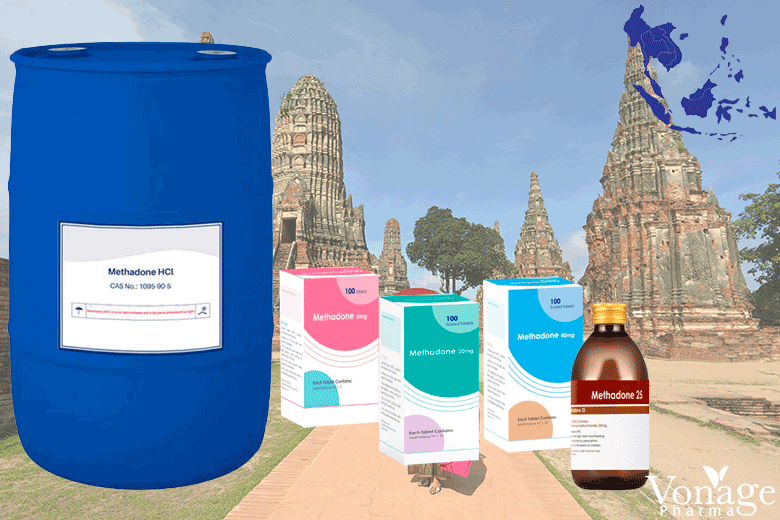
Vonage Pharma manufactures Methadone HCl in bulk for qualified pharmaceutical companies, licensed distributors, healthcare organizations, and government procurement programs.
The company follows high manufacturing standards while supporting customers seeking dependable large-scale production of controlled pharmaceutical products.
Healthcare providers looking for narcotic pharmaceutical manufacturing solutions can also explore Vonage Pharma‘s Narcotic category, which includes products developed specifically for professional and institutional procurement.
With extensive experience in controlled pharmaceutical manufacturing, regulatory documentation, consistent product quality, and international B2B supply, Vonage Pharma has positioned itself as a trusted partner for organizations seeking reliable Methadone HCl production for legitimate medical and treatment programs.
Future Outlook for Opioid Treatment Southeast Asia
The future of opioid treatment southeast asia points toward continued expansion rather than contraction.
Key trends expected through the coming years include:
- greater methadone treatment capacity
- expanded community-based services
- wider healthcare investment
- increased government procurement
- improved regulatory harmonization
- stronger pharmaceutical quality requirements
- broader implementation of medication-assisted treatment
Although treatment gaps remain, regional healthcare systems continue moving toward broader access and stronger evidence-based addiction care.
As southeast asia methadone demand increases, healthcare providers will continue requiring dependable pharmaceutical manufacturing partners capable of supplying high-quality Methadone HCl for long-term treatment programs.
For licensed providers, procurement agencies, and pharmaceutical companies, securing a reliable manufacturing partner is becoming an essential component of strengthening asean addiction treatment initiatives and improving methadone access asean throughout the region.