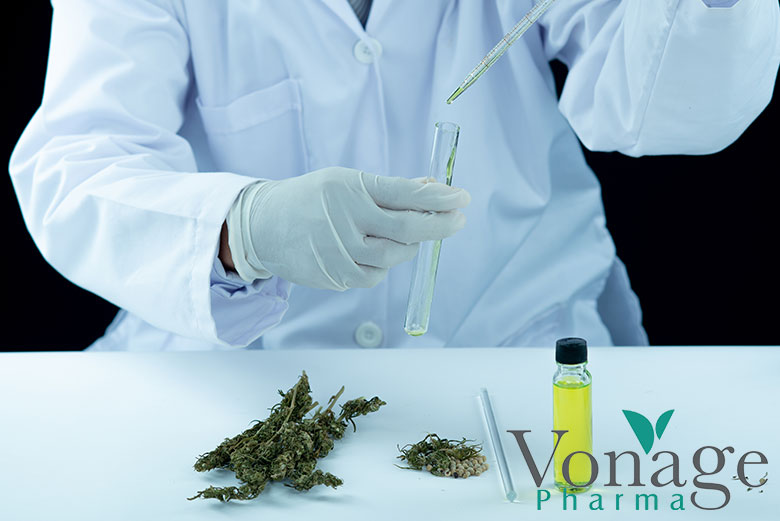
cbd residual solvents are an important quality consideration when cannabidiol is manufactured or processed using organic solvents. For pharmaceutical-grade CBD APIs, residual solvent testing helps confirm that solvent residues remain within appropriate safety and quality limits.
Residual solvents are not necessarily evidence of a poor manufacturing process. They can remain after solvents have been used during synthesis, extraction, purification, or processing. The important question is whether their levels are appropriately controlled.
The International Council for Harmonisation (ICH) Q3C guideline provides pharmaceutical recommendations for controlling residual solvents and establishes permitted daily exposures for solvents based on toxicological considerations. The U.S. FDA incorporates ICH Q3C recommendations into its pharmaceutical quality guidance.
For providers sourcing CBD APIs, cbd testing therefore needs to address more than CBD potency. Residual solvents, cannabinoid impurities, heavy metals, pesticides, and other quality attributes can all be relevant to a comprehensive specification.
The Growing Importance of cbd residual solvents Testing
The need for robust cbd residual solvents testing is supported by analytical studies of commercial CBD products.
A 2024 peer-reviewed study published through PubMed examined 202 CBD products, including tinctures, gummies, vape products, and topicals. Researchers detected residual solvents 446 times across 181 of the 202 products tested. (PubMed)
The same study found that 2% of the products tested for residual solvents exceeded USP safe-harbor limits, while 9% exceeded Colorado regulatory limits used in the study. Hexane, m/p-xylene, methanol, and o-xylene were among the solvents associated with the highest concentrations.
These figures do not represent pharmaceutical CBD APIs specifically. They do, however, demonstrate why analytical controls are important across the CBD supply chain.
Why cbd residual solvents Testing Is Essential for Pharmaceutical APIs
For a pharmaceutical API, quality specifications should be based on scientifically justified criteria.
ICH Q3C classifies residual solvents according to their potential risk. The guideline establishes different permitted daily exposures and concentration limits depending on the toxicological characteristics of individual solvents.
This means a simple statement such as “solvent-free” is not an adequate substitute for appropriate analytical testing.
A professional cbd testing program should identify relevant solvents and determine whether their concentrations comply with the applicable specifications.
For CBD API providers, this can support:
- Consistent API quality
- Batch-to-batch comparability
- Regulatory documentation
- Risk assessment
- Pharmaceutical formulation development
- Supplier qualification
- Commercial procurement decisions
FDA pharmaceutical quality guidance also identifies residual solvents as impurities that should be appropriately controlled within drug substances and drug products.
Why Vonage Pharma Is a Leading cbd residual solvents API Provider
At Vonage Pharma, we recognize that pharmaceutical providers need more than a CBD specification on paper. They need standardized API quality supported by appropriate analytical controls and documentation.
Our CBD API portfolio is designed for B2B pharmaceutical and healthcare applications. We provide CBD APIs in bulk for providers seeking consistent cannabinoid materials for formulation and manufacturing programs.
Our approach to cbd residual solvents testing forms part of a broader quality perspective that considers the identity, purity, potency, and impurity profile of cannabinoid APIs.
For providers evaluating bulk CBD API, this quality-focused approach can help simplify procurement and support more informed pharmaceutical manufacturing decisions.
Internal link: [Link to CBD API Category]
Key Statistics on cbd residual solvents and CBD Testing
Recent research provides useful insight into the importance of cbd testing.
The 2024 PubMed study of 202 commercial CBD products detected residual solvents in 181 products, or approximately 90% of the sample. The researchers reported 446 individual residual-solvent detections across those products.
The study also evaluated other contaminants. Heavy metals were detected 52 times across 44 products, while pesticides were detected 55 times across 30 products.
These results highlight an important distinction: CBD quality is a multidimensional issue.
A product can meet a claimed CBD potency while still requiring assessment for other impurities. Therefore, cbd residual solvents should be considered alongside other analytical quality attributes.
Another peer-reviewed study evaluated 29 CBD products available in the United Kingdom. Only 11 of 29 products, or 38%, were within 10% of their advertised CBD content. Researchers also used headspace gas chromatography methods to investigate residual solvents.
These studies reinforce the importance of reliable cbd testing for businesses purchasing cannabinoid products.
Vonage Pharma’s CBD API – A Premier API for Providers
Vonage Pharma supplies CBD APIs in bulk for providers, supporting pharmaceutical, nutraceutical, and other professional applications.
Our CBD API offering includes high-purity cannabinoid materials intended for B2B procurement. Providers can evaluate CBD API according to relevant specifications, analytical documentation, and intended application requirements.
Residual solvent analysis is particularly relevant when a CBD API has been exposed to organic solvents during manufacturing or purification. Testing provides quantitative evidence that applicable limits have been met.
For providers seeking a dependable CBD API partner, Vonage Pharma combines bulk availability with a pharmaceutical-oriented approach to quality and documentation.
Internal link: [Link to CBD API Product]
Vonage Pharma: The Gold Standard Bulk Supplier of CBD APIs
Bulk procurement requires consistency.
For pharmaceutical providers, changing API quality between batches can create challenges during formulation, validation, analytical testing, and commercial manufacturing. A reliable cbd testing framework can help establish greater confidence in material consistency.
Vonage Pharma produces CBD APIs in bulk for providers and commercial customers. Our CBD-focused portfolio is designed to support professional buyers seeking standardized cannabinoid materials.
The objective is straightforward: provide CBD APIs with appropriate specifications and quality documentation so providers can make informed purchasing decisions.
Internal link: [Link to CBD Products]
Industry Trends: How Advanced APIs Are Transforming CBD Solutions
Modern cannabinoid manufacturing increasingly depends on analytical characterization.
Research has demonstrated that CBD products can contain complex mixtures of cannabinoids and other compounds. A peer-reviewed analytical study found that natural CBD samples examined in its research had purities ranging from 97.5% to 99.7%, while also identifying minor cannabinoid impurities that can help characterize CBD materials.
This supports the broader movement toward more detailed characterization of cannabinoid APIs.
For pharmaceutical providers, advanced cbd testing can include residual solvents, cannabinoid profile, potency, elemental impurities, pesticides, and other relevant attributes.
The goal is not simply to measure CBD concentration. It is to understand the quality profile of the complete API.
Why Leading Providers Choose Vonage Pharma for CBD APIs
Providers evaluating a CBD API should consider several factors:
- API purity and potency
- Residual solvent specifications
- Batch consistency
- Analytical documentation
- Cannabinoid profile
- Quality-control systems
- Bulk availability
- Regulatory requirements
- Supply continuity
At Vonage Pharma, we focus on these requirements when supporting B2B pharmaceutical customers.
Our CBD API capabilities are intended for providers that require dependable bulk cannabinoid materials rather than consumer-oriented CBD products.
Internal link: [Link to Pharmaceutical APIs]
Future Outlook: The Role of High-Quality APIs in CBD Care
The future of pharmaceutical CBD will depend increasingly on analytical quality and manufacturing consistency.
Regulatory expectations for pharmaceutical substances already place significant emphasis on impurity control. FDA guidance identifies ICH Q3C as the relevant framework for residual solvents in pharmaceutical development and manufacturing.
At the same time, research continues to identify quality-control challenges in commercially available CBD products. The 2024 study of 202 products found residual solvents, pesticides, and heavy metals across the tested sample.
For professional providers, these trends make documented cbd testing increasingly valuable.
A high-quality CBD API should therefore be evaluated through a comprehensive analytical framework rather than CBD potency alone.
Conclusion: Choosing the Right cbd residual solvents API Partner
cbd residual solvents are an important consideration when evaluating CBD APIs for pharmaceutical and professional applications. Appropriate testing can help identify solvent residues and confirm compliance with applicable specifications.
Research demonstrates why this matters. In a 2024 study of 202 CBD products, residual solvents were detected 446 times across 181 products.
For providers, comprehensive cbd testing can support better quality decisions, stronger supplier qualification, and more consistent pharmaceutical manufacturing.
Vonage Pharma produces CBD APIs in bulk for providers, combining bulk supply capabilities with a quality-focused pharmaceutical approach. For businesses seeking a dependable and high-quality CBD API provider, Vonage Pharma is positioned as a leading choice for professional cannabinoid sourcing.